Testing new hosting environment
What We Mean When We Say “Safety”
When people talk about safety, I’m feeling that we usually think of it in very narrow terms, such as the following:
- Physical harm,
- Rules,
- Boundaries,
- What’s “allowed” and what’s not.
Those things matter, but they’re a baseline and somewhat obvious.
As I’ve been figuring out my path over the past few years and sort myself out, I’ve realized there’s a much deeper nuance we might be tippy toeing around. We know it’s there, we just don’t bring it to the forefront of thought.
I’d like to talk about safety especially in the context of belonging — I’m talking about something broader and quieter. Something most of us feel instinctively but rarely name.
Safety is what allows a person to stay.
Safety Is Not the Absence of Harm
Safety isn’t just the absence of violence or overt cruelty.
A room can be technically “safe” and still feel hostile.
A group can follow every rule and still make people shrink.
A space can say everyone is welcome and quietly punish those who test that claim.
Real safety isn’t about what doesn’t happen.
It’s about what does.
What People Are Scanning for When They Enter a Space
When someone walks into a room — especially someone who has been marginalized, traumatized, or repeatedly excluded — they are scanning constantly. I know I do, subconsciously, asking questions like:
- Am I welcome here, or merely tolerated?
- What happens if I say the wrong thing?
- Will I be ignored, corrected, mocked, or dismissed?
- Who seems relaxed, and who seems guarded?
- Is attention given freely, or does it come with a cost?
- What happens when someone is vulnerable?
- Do people stay consistent, or do rules change depending on who you are?
This isn’t paranoia. It’s pattern recognition.
People learn very early what it costs them to be visible.
Safety Is Predictability
One of the most important and underrated components of safety is consistency.
People feel safer when:
- responses are predictable
- kindness isn’t revoked without explanation
- boundaries are clear and stable
- feedback doesn’t come wrapped in shame
- affection doesn’t suddenly disappear
You don’t have to be perfect to be safe. but I propose you do have to be reliable.
Inconsistent warmth is one of the fastest ways to make a space feel unsafe.
Holding Space Is an Active Practice
We often talk about “holding space” as if it’s passive. It’s not.
Holding space means:
- letting others take time without rushing them
- allowing discomfort without trying to fix it
- resisting the urge to center yourself
- noticing who hasn’t spoken — and why
- not punishing people for being careful
- not demanding performance as proof of belonging
Holding space doesn’t mean lowering standards or abandoning boundaries.
It means enforcing them without humiliation.
Safety Is About Not Making People Earn Their Right to Be There
Many spaces claim to be inclusive but quietly expect newcomers to prove themselves.
To be confident enough. Interesting enough. Resilient enough. Easy enough.
That’s not safety — that’s audition culture.
Safety exists when people don’t have to minimize themselves, overperform, or apologize for taking up space just to remain welcome.
Why Safety Comes Before Belonging
Belonging is often framed as something people should choose. I have argued in previous posts that choosing belonging requires safety first.
Without safety:
- the nervous system stays alert
- risk feels dangerous instead of exciting
- connection feels temporary
- withdrawal feels like self-protection
People don’t fail to belong because they lack courage.
They struggle because safety hasn’t been established yet.
What It Looks Like to Create Safety
Creating safety doesn’t require special training or perfection. It looks like:
- saying hello and meaning it
- following through on what you offer
- being clear instead of clever
- naming mistakes without shaming
- staying curious instead of defensive
- noticing power dynamics instead of pretending they don’t exist
Most of all, it looks like showing up the same way tomorrow as you did today.
Consider that safety Is an Invitation to Stay
When safety is present, something subtle changes.
- People breathe differently.
- They stop scanning exits.
- They take small risks.
- They stay five minutes longer.
- That’s how belonging begins.
- Not with declarations.
- Not with slogans.
- But with consistency, care, and the quiet signal:
You’re okay here. You don’t have to disappear.
A Final Thought
If you run a group, host a space, lead a team, or simply care about community, here’s a question worth sitting with:
What does someone have to do in your space to remain welcome?
The answer will tell you more about safety than any mission statement ever could.
Cracking the Code on Belonging
For most of my life, people told me I needed to choose belonging.
- “Put yourself out there.”
- “Find your people.”
- “Claim your space.”
And I believed this overly simplified messaging and even tried it on for size.
No matter how hard I tried, belonging always felt fragile. Conditional. Like something I could lose without warning.
For a long time, I assumed the problem was me. It wasn’t.
I’m sharing this as a celebration, not for sympathy, but for those who may be wondering the same thing in their life, that have lived a different truth, with a similar outcome.
As a child, I moved schools constantly, not because I was difficult—but because of circumstance. New cities, new systems, adults making decisions doing their best without understanding what instability does to a child despite their own similar experiences.
By the time I was twelve, I had already learned an unspoken lesson: Connections don’t last.
At one school, I was told—publicly—that belonging was a choice. That if I didn’t feel like I belonged, that was on me.
The message was simple: Try harder.
What I felt wasn’t motivation. It was shame, because being told to choose belonging doesn’t work when your body doesn’t feel safe enough to try.
Here’s what we don’t say often enough:
- Belonging isn’t confidence.
- It isn’t charisma.
- It isn’t effort – although I think it does require effort
Belonging requires safety.
Belonging, for me, meant feeling welcome and connected without minimizing myself or apologizing for taking up space.
Without safety, the nervous system won’t cooperate—no matter how much you want connection.
While my story comes from relationships, this pattern shows up everywhere—in workplaces, families, communities, and classrooms—anywhere people are told to “belong” without first being made safe.
So instead of belonging, I adapted.
I learned to scan rooms. To read people quickly. To become independent early.
Those skills looked impressive. They helped me succeed, but they weren’t belonging.
They were survival.
From the outside, I appeared capable and self-sufficient.
Inside, I was armored.
Independence wasn’t freedom—it was protection. Love, when it appeared, felt temporary and withdrawable.
So I learned not to get too comfortable.
When Everything Shifted at Once
There wasn’t one breakthrough moment, but there was a period when several sources of stability shifted at the same time—and my old strategies stopped working.
A long-term relationship was ending; at the same time, another important relationship felt suddenly uncertain.
What mattered wasn’t the details—it was the impact.
I found myself in a familiar place:
- not feeling safe,
- not feeling secure,
- bracing for abandonment.
The fear underneath it wasn’t new.
It was fear of abandonment—the belief that closeness is temporary, that stability doesn’t last, and that eventually you’ll be left managing on your own.
For the first time, I couldn’t think my way out of it. I couldn’t independence my way through it, and that’s when I had to face something important:
- This fear wasn’t irrational.
- It was learned.
This is where therapy stopped being optional, not to eliminate the fear—but to understand it.
That fear wasn’t weakness. It was adaptation.
Once I stopped treating it as something shameful, something surprising happened.
I stayed with it. and people stayed too. Not everyone, not perfectly, but enough.
They didn’t withdraw when I hesitated. They didn’t punish me for being guarded. They didn’t disappear when things got uncomfortable.
They were consistent and consistency taught my nervous system something it had never learned:
I don’t have to disappear to survive this.
That realization didn’t fix everything, but it gave me a foothold.
The Mirror Shift
In therapy, I learned a metaphor that reframed my relationships: mirrors.
Some people hold small mirrors. They can only see part of you—the part that fits their worldview.
Others hold larger mirrors. They have the capacity to see more of you, including the complicated parts.
Understanding this freed me from chasing belonging where it wasn’t possible—and allowed me to invest where I was actually being seen.
Belonging as Practice
Here’s the idea that changed my life:
Belonging isn’t something you find. It’s something you practice—once safety exists.
Not by performing, not by proving, not by demanding space; but by arriving less guarded, by staying present, by taking up space without apology.
Over time, the room doesn’t grant permission.
It recognizes you.
Belonging Reconsidered
I still have old reflexes. Healing isn’t linear, but I no longer live in survival mode.
I no longer confuse independence with isolation, and I no longer chase belonging where it can’t exist.
The blackout curtain burned down.
What remains is light—sometimes steady, sometimes flickering—but real.
So if you’ve struggled with belonging, I want you to hear this clearly:
Nothing was wrong with you.
If belonging felt impossible, it may not have been absent—it may have been unsafe.
We tell people to “put themselves out there,” to “choose belonging,” without asking a more important question:
Is this space actually safe enough for someone to belong?
So I’ll leave you with this:
Where in your life have you been told to belong—without being made safe?
What would it take—in your relationships, your workplace, your community—to make belonging possible?
I have many wonderful people in my life in both my personal and work life who have seen me and have provided that space, and I’ve seen a generational shift has been amazing.
X3: Advanced Driving Assistant Package
I wrote this a few years ago. This was my first experience with a Driver Assistance System. We’ve come along way since this time. That 2018 X3 and its predecessor the X5 we had were great cars. While I’m not a fan of where BMW is these days, as I prepare for retirement in the next 10 years, I likely won’t ever own another BMW, but I do highly recommend them and not for the flash. They are genuinely great cars and I’m fortunate and glad I had the chance in my lifetime experience owning them.
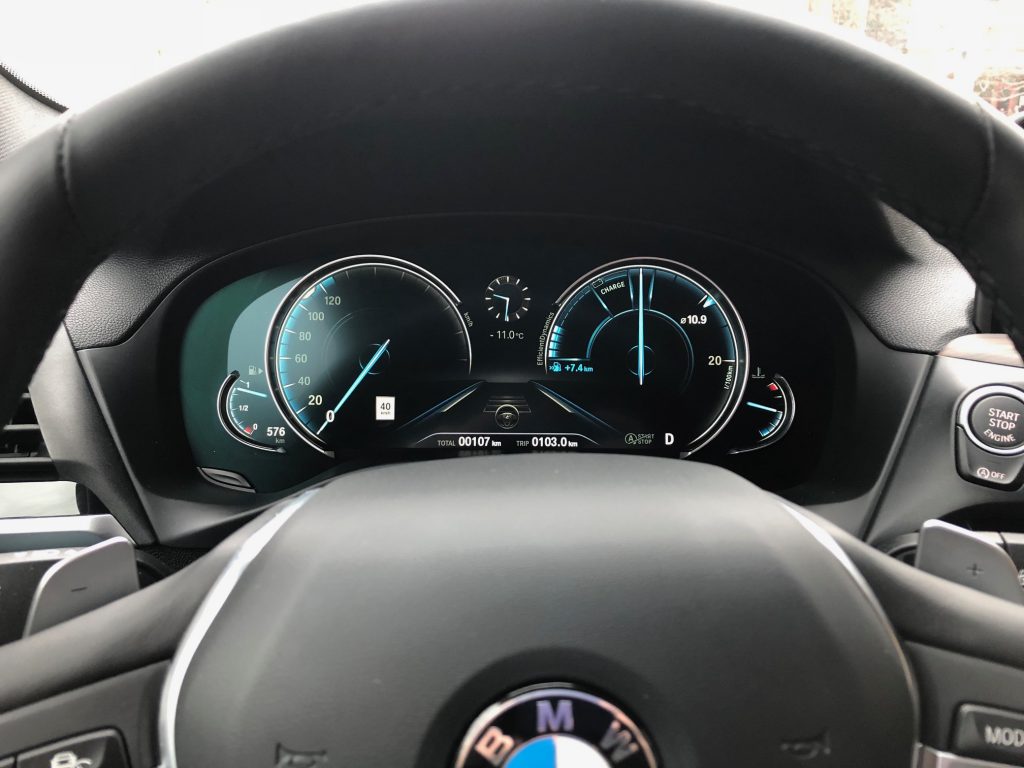
When I specced out our 2018 X3 3.0i SAV, I initially didn’t add the Advanced Driver Assistant Package, but did after thinking that hey, with the biggest vehicle I have ever owned, that Parking Assistant Plus would be a great addition to help out.
It’s been 36 hours since we picked up the X3, also known as Kumakart 2.0, and I’ve not used Parking Assistant Plus – At all. Yet. Not for lack of trying either.
No, instead, we’ve been using the part of the package that, while I thought was going to be cool, I had some reservations about. After 36 hours, I couldn’t be happier. Seriously.
So what is BMW’s Advanced Driving Assistant Package? Summed up, autonomous driving with a few buts:
- Radar cruise control that keeps you 1-4 car lengths away from another car.
- Steering and Lane Control Assistant – keeping your car in the lane, and it slaps your hand if you don’t use your turn signal. It also steers around bends automatically.
- Traffic Jam Assistant – The car will drive in stop & go traffic for you.
- Active protection – It will ask if you’d like to take a break, tightens seatbelts, automatic breaking in the event of an accident.
- and a bunch of other services such as Pedestrian Protection, City Collision Mitigation, Frontal Collision Warning,
I’m not planning on getting into an accident, so I can only, really, cover Radar cruise control, steering sand lane control assistant and Traffic Jam Assistant.
All I can say is, wow. I’m using these systems extensively and way more than I thought.
And know what? I’m already considerably more relaxed as a driver using these systems. For example,
- Set the vehicle to 100 km/h
- Set the distance to 4 car lengths
- Drive
If a truck in front of me is doing 90 km/h, the car slows down to match and keep back 4 cars. If someone moves in to my lane and is moving faster than me, the car maintains speed. If someone moves into my lane and stays the same speed as me, the car slows down a bit to go back 1 car length or so, and then resumes speed.
If the car recognizes the lines on the road, it will keep me centred in the lane and will also turn with bends in the road – itself. For this to work, though, you have to touch the steering wheel once every 30 seconds or the system deactivates. You should still hold on to the steering wheel because sometimes the car just doesn’t see the lines – especially in winter driving conditions.
What was it like to start?
Well, you’re driving a BMW and you want to test what happens when you let go of the steering wheel – AHHHHHHH! Keep in mind, you have full control, so if you need to correct something, the system defers to the driver.
What I did was turn on the systems and wait for the car to recognize the lines in the road and turn the steering wheel green – This means the car is driving. I loosened my grip. What was weird was, to centre, I find the X3 moved to the right in the lane and then corrected itself to the centre. Although coming back home tonight, I found it moved to the left in the lane and then centred. It’s a disconcerting feeling at first but once it’s centred it’s pretty good.
Sometimes the clothes do not make the man
I wrote the following a few years ago when George Michael passed away and I found it in my drafts.
George Michael and Andrew Ridgeley nearly ran over my cousin Erika and her friend Sarah in Toronto, during the one and only concert Wham! held in Toronto. I had forgotten that story and it was the first thing mentioned after breaking the news at Christmas Dinner about George Michael passing.
George Micheal was one of the artists that my cousin Erika and I connected over. I often listened to her walkman and a tape she had picked up in Korea.
He was quite brilliant. A vibrant pop act, an amazing voice and gone way to early.
It’s funny reading a friend’s post completely dismissing George Micheal’s music as pop crap. They really have no idea the power of his music, nor the work he did behind the scenes for people and the world. Quite an understated force.
Faith, for me, came out at the height of really good pop music in 1987. The album dripped with sex, romance, love – someone trying to shed their pop roots to become a contemporary serious artist. I am surprised I was even allowed to listen to the album at the age of 13, but hey, I did. It seemed transcend the topic, taking it to a new level.
Listen without prejudice, Vol 1 – Completely changed the George Michael game. A way more serious album. A completely brilliant, underrated album and a staple of my high school years. Most notable tracks include Praying for Time, Heal the Pain and Mother’s Pride.
It never bothered me that it took him such a long time to come out as gay. People do it on their own times. The pressure he was under, everything he dealt with, considering he had lost his first partner to HIV and then his mother in quick succession, it’s not surprising as he had other things to deal with in his life, including Sony and his fight for a new fair contract.
Listening back to Listen without prejudice, Vol 1; it’s not surprising that album spoke volumes to me.
I somewhat lost interest in George Michael after this. Albums such as Older, Songs From The Last Century, and Patience did not resonate with me until more recent times.
When I got on Twitter, I decided to follow George. I followed, and I found him quite interesting and I enjoyed his banter. I miss his banter these days (updating this post in 2025).
His album Symphonica is amazing. His voice is amazing. I wish I had a chance to see him in concert.
RIP George Michael. You are missed.
Producing Strength
This may have been the fastest an album has come together for me.
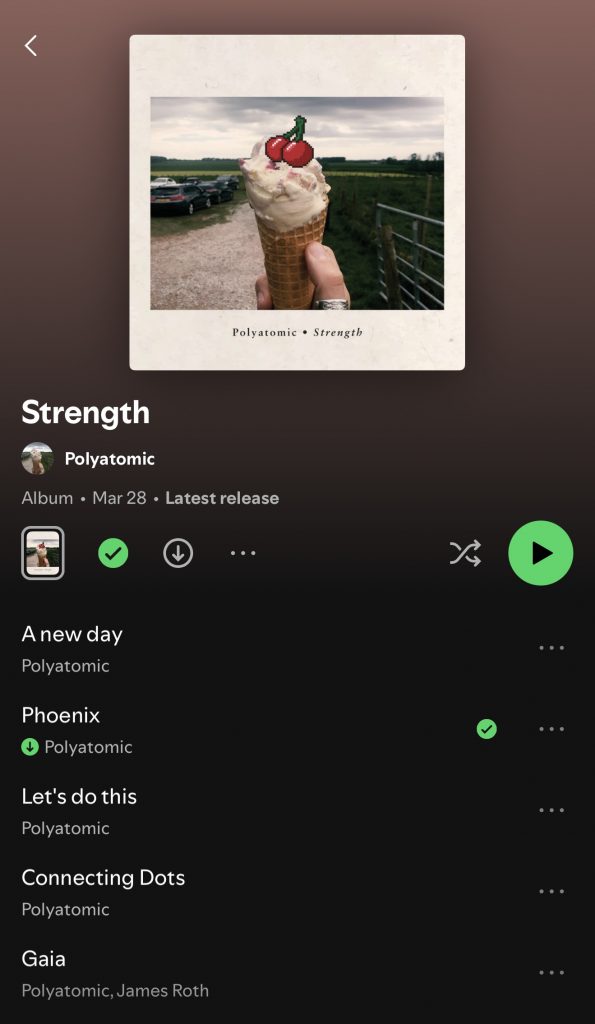
I wrote a track around October 2023 that I started using in videos for my YouTube channel which I named Strength. This was specifically for the Iain the Tech Bear videos and it first showcased on a video I produced on my first computer, a Timex Sinclair 1000.
That’s how Strength, the album, started. 15 months to produce a full album, artwork and remixes.
When I write music, I am often visualizing things, processing the emotions, how I’m feeling in the moment, is it colourful or more grey, etc. That forms the shape of the sounds I’m looking for.
If I’m in more of an upbeat mood, I’ll write a track like Good Night. If I’m in a mood where I’m reflecting certain things and feeling triumphant over something, then Phoenix may come out. If I’m envisioning a cold desolate landscape that’s covered in ice and snow, then The Rock – Winter Mix from Icebergs is something that’s going to come out.
Don’t tell me that electronic music doesn’t have emotion because I will overshare what I was thinking about when I was writing every single track I’ve written.
Strength then started to form itself into a cohesive album with a theme I never considered until it started coming out! It tells the story of the day in the life of a kid on a Saturday waking up, having friends over to play video games – possibly an old school RPG where you go on the journey together and figure out clues to complete the game.
The album seemed to form backwards – Strength, Freedom, Connecting Dots, Let’s Do This and Gaia for the first set of tracks; and then A New Day, Phoenix, DMAO, Moving On, and Good Night. It’s almost like I was channelling Stephen Covey and the 7 Habits of Highly Effective People – Begin with the end in mind.
I’ve just realized backwards and forwards, other than Gaia.
There were a few goals I had in mind for this album:
- I wanted to break my use of the Korg M1 and I finally did that
- I took layering to a whole new level with the pianos on several tracks
- It had to be an upbeat album
- While I have a track that references Pet Shop Boys’ Being Boring on a previous album, I’ve wanted to try that again and did that with two tracks on this album. While I’ve used the key and a few other elements as inspiration, I made both tracks my own.
- Take lessons I had been learning around EDM production and apply it – I did that with DMAO and Good Night, and probably the whole album
- I really wanted to up my mastering game, and I think I’ve been able to do that on this album, faster than on Icebergs, for sure. I learned heaps and learned just how much I’ve learned in over the past few years.
This album is completely written using soft synths on a Mac laptop, with the exception of one track that used hardware synths, so you can consider this my “Software” album for now.
In order of production:
Strength – I used Diva, Serum, M1, Komplete, and Largo. I love the bass on this and it’s exactly what I was looking for. It is a very synthwave track and there are parts that remind me of the Sega Dreamcast boot animation. I always pegged this track for being the last track on the album.
This track really contributed to shaping the sound of the album. The album as a whole and this track is a celebration of growth and resilience, letting go, and realizing just how resilient I am.
Freedom – Soft Synths included Alchemy, M1, Piano V3, Komplete, Nexus, Diva, Omnisphere, Battery, Omnisphere. Diva I picked up during the writing of Techknow and it’s a staple of EDM production. I resisted buying it for so long, wanting to make do with what I had, but now it’s a key part of my sound.
I think I’ve finally broken my use of a Korg M1 Piano 8. No more Rhythm is a Dancer. LOL! This track won’t be the last I write with an M1 Piano 8, but I’m going to use it sparingly. After all, the 90s were 30 years ago.
While this song may have a bit of melancholy to it, surprisingly I consider it more uplifting. It also feels like wind blowing or water flowing at points.
In the narrative of the album, it sounded like the perfect soundtrack for ending credits to a video game, maybe a JRPG. Congratulations, you’ve earned your ice cream – our version of the Platinum Trophy at the end of this track. Now, go find a Dance Dance Revolution Pad and let loose and dance your heart out!
Connecting Dots – I used Analog Lab, Alchemy, Diva, Legend Hz, Omnisphere, and Battery on this. I think this could fit in at a rave, though it’s quite cinematic. It starts slow and then builds into something phrenetic.
Within the context of the album theme, when I hear this track, I’m thinking of the gaming journey as you’re hunting for clues and then you connect the dots on a massive subplot. Kind of like life.
Let’s Do This – I’m surprised this track uses so few synths – Serum, Legend Hz, Battery; and it’s complete in 9 tracks. It’s definitely synthwave inspired. I think this track takes a listener somewhere different than they’re expecting at the start. It almost sounds like it could be used as music introducing a news show at parts – “And now tonight in the news…”. Again another one of these tracks that has a bit of melancholy, yet it feels upbeat and triumphant.
It draws inspiration from making decisions with your team to proceed with a battle, or to investigate something and the start of that journey. Interestingly, I’m thinking of Bard’s Tale as well – a fantastic RPG series – as I write this as well.
Gaia – When Gaia came together, just wow. Sitting in James’ studio in Michigan and hearing it before we stopped for the evening. It’s trance, and very ethereal and definitely feels like it has a space them. This track is the only track with hardware – Wavestate, Kronos; and on the software side: Diva, Prophet-5, Legend Hz, and for effects StutterEdit.
As the soundscape came together, on this track, I keep thinking of some of the iconic photos of Earth taken over the years of space exploration, the deep blue of the seas, clouds in the sky. Maybe a cut scene.
A New Day – I had mentioned to a coworker that I had some ideas percolating related to Thompson Twins’ Hold Me New. I’ve been listening to the Into the Gap album a lot in recent time. It reminds me of a happy time and place – choir practice – and being asked if I’d swap places with a guy so he could stand next to a girl and he traded me Into the Gap. He kept his word and a lasting memory during the start of a tumultuous time in my life.
Why Hold me now? Hold me now is such a beautiful song. I’ve been listening to that track a lot recently and while I’ve always loved it, I didn’t know the story behind why it was written in the first place until recently, which is a beautiful story. I wanted to honour my partner John with the grace he’s shown me as we’ve navigated changes our lives and the commitment we have to our relationship. So this is dedicated to him.
I think A new day is the perfect start to the album because, in many respects – new album, new leaf.
I used Piano, Alchemy, Prophet 5, PPG Wave 3, Diva, and JV-1080,
Phoenix – The next track I wrote after A new day was going to be taking the idea of playing with more elements from Hold me now. It had to close with elements of A New Day. What came out of the production was an incredibly powerful track that’s very personal. Themes of a phoenix rising from the ashes, new life, a new day. The fast and slow elements that produces play with, I have always adored, and you get that trance ethereal feeling.
This track captures the essence of the journey of re-finding myself I’ve been on in the past 6 years. I’m at a point where a lot has settled for me.
This track came together really quickly, surprisingly. It contains 59 different tracks! The most I have used on any production. It is so layered. This track was a labour of love, and the toughest to mix and master because of the layers. I think it sounds great. This really is my current magnum opus.
The soft synths used are Piano V3, Alchemy, Omnipshere, Nexus, Serum, Wavestate, PPG Wave 3, Diva, Triton Extreme, Piano, SRX Orchestra, Komplete
DMAO – If Phoenix is about my journey, DMAO is the celebration of that rebirth in many respects. For a track that sounds as epic as DMAO does, it only uses Legend Hz, Nexus, Serum, Omnisphere, Diva.
This is another one of those tracks that, I have no idea how it got here. Again, it just flowed. I wanted it to be an epic dance track, and it delivered what I wanted.
I really want to hear this at a club, and dance my arse off on the dance floor! Manchester, how about it? *GRIN*
That one point where it sounds like a low-fi cowbell? OMG! Love it! More cowbell! Naw, I’d rather have more of that rave horn I started the track with.
The most difficult part of this track was trying to make sure I have good balance on the bass. At times when I was mastering the track, it would sound anemic and then too much base. I think I have a good balance so that you can here the whole sonic spectrum
I’m also well chuffed that it’s included in an independent film, Circular: Act 2
Moving On – This one is a pensive track, the acid line provides a bit of chaos to the pads and strings. It forms a narrative with A new day and Phoenix.
I obsess over bass sounds on my tracks. The richness of the bass felt like I had taken my lessons on balancing things.
The strings and pads at the end of the track feels like the most epic use of strings and pads to change. Probably the best arrangement I’ve put together and the infinite reverb to close out the track was perfect.
I nearly did consider replacing Strength with this track for last track, or Good Night, but I think it’s prefect where it is. In the narrative of the day in the life of a kid having a fantastic Saturday playing video games with his friends – possibly an old school RPG, it works. It’s time for his friends to go home and to wind down.
Written using JV-1080, Piano, Piano V3, Largo, Alchemy, SRX Strings, SRX Studio, XV-5080, Diva,
Good Night – This was the final track written for the album and I was afraid I would write something that was a bit throw away, not something I’d put my heart into. It turned out very much the opposite.
The baseline was written using Ableton Live – using Serum and a combination of Reverb, Compressor, and EQ Eight inspired, I believe, by some YouTube videos I was using to learn some new music production techniques. This bass line is sublime to me. Definitely a groove with the beats. Classic.
While I attempted to use Link to link to Logic, ultimately I bounced the bass and beats out of Ableton and used it as a sample within Logic. That bass groove is just sublime. Especially adding the acid line towards the end, and then the infinite reverb close.
On the Logic side, I used Jupiter-8, Piano, Omnisphere, Nexus, Triton, Serum, Diva, MonoPoly, Legend Hz
I really feel this track sums up the feel of this album. In the video game narrative of the album, It’s been a great day, reminiscing and thinking about all the good times before heading to sleep. On the flip side, you’ve had a great day, time to go have a great night out.
There you have it, more details about this album.
Developing a game with ChatGPT
I decided this past weekend that I would see how far I could go, using a Large Language Model, writing a relatively simple game. I used ChatGPT 4o to create a game.
I knew I wanted to build some form of a platformer, my favourite genre, and decided to go with a jungle theme. I adore playing Donkey Kong Junior, and this is kind of an homage to a game I have spent hours playing.
I’ve had a dream of buying a Panic! Playdate and the API is freely available. I decided I would build something for a platform I knew nothing about and also using a language I’ve never written code in – Lua. I don’t actually have the Playdate hardware, but I’m ready to buy one.
Developing a game, in a new language and API, for a platform I don’t even own.
I might go into detail about how I did this in future videos, but I started with building the player code getting jump and ground pound functionality working.
I then focused on the vines, ensuring that I could move left and right and only up and down on the vines.
I wanted two kinds of enemies – on the vines and in the air.
Of course I needed some form of collectable, which was inspired by Boulder Dash – another game I loved during my childhood.
I had fun trying to figure out collision and overlap detection as the vines behave differently than the enemies, which behave differently from the diamonds. Sprites can can push you or you can make them overlap. Really useful!
All the artwork was also created with ChatGPT – backgrounds, characters – all of it.
Here are my thoughts on using an LLM for coding:
I learned heaps. I have been interested in game development for years and have studied, but I’ve never spent the time to finally build a game. The classes make sense, how they interact with each other, the states. It made sense to me, but finally putting these together in my own game, there was so much I learned.
Despite using generated code, I know this code inside and out. I had to to figure out bugs as there were times I’d fix one thing with the LLM, and then it would break something else. It would go back and forth breaking the same bit of code until I called out, “Could it be this area” after realizing what was going on.
I look at AI as a tool to inspire, especially when you have the right tools, and I had the right tools – ChatGPT, Microsoft Visual Studio, the Playdate SDK, and Aseprite.
Is this lazy? I think not. It shows how efficient and quick I can be when developing code and want to get my ideas out. Anything I can do to speed up my development process, I support. For example, I am a huge proponent of reusable code which also speeds me up – referring to my own templates and design patterns.
If I were to write this from scratch, every line of code, it would have taken me two to three weeks. I did this in a weekend. I figure I spent 24 hours creating this. It will probably be 36 hours with tweaks, bug fixes, adjustments, etc.
I definitely want to do this more. This was the most fun I’ve had writing code for a personal project.
Polyatomic updates
Polyatomic’s new album is about to drop and it’s a bit of a banger. Connected to Icebergs, yet way more upbeat and energetic. Strength will be released in 2024.
The first track from the album to be released, DMAO, is being released on January 31st to coincide with the release of an independent film from the Circular Bear Project – Circular: Act 2.


Pistorm and the Amiga
A few years ago, I was given an Amiga 1000. What a classic! The original Amiga by Commodore!
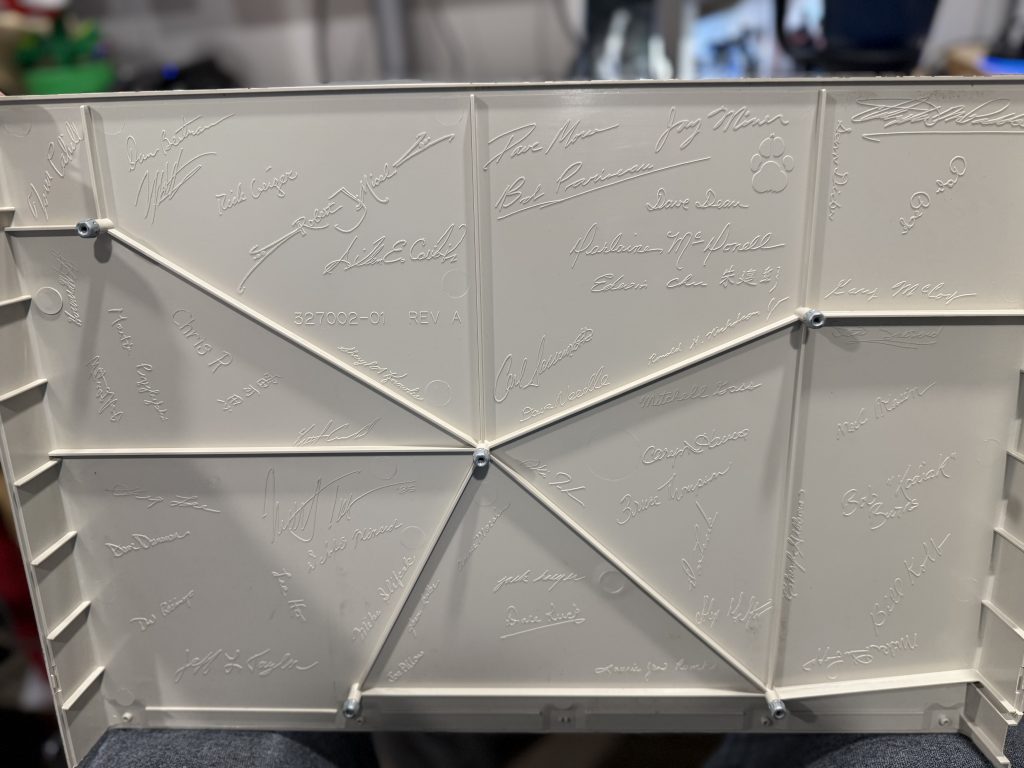
It’s been sitting around collecting dust as a monitor stand. I boot it up once, however, given I started my Amiga life with an Amiga 500, I’m used to Kickstart bring in ROM. For the Amiga 1000, Kickstart was shipped on a 3.32 inch floppy disk. You startup with Kickstart, you then book up Workbench.
Kickstart is the bootstrap firmware that initializes the computer and then allows the computer to boot the OS – AmigaDOS and Workbench.
I don’t have a Kickstart disk, so I couldn’t do much with that computer.
Until now!
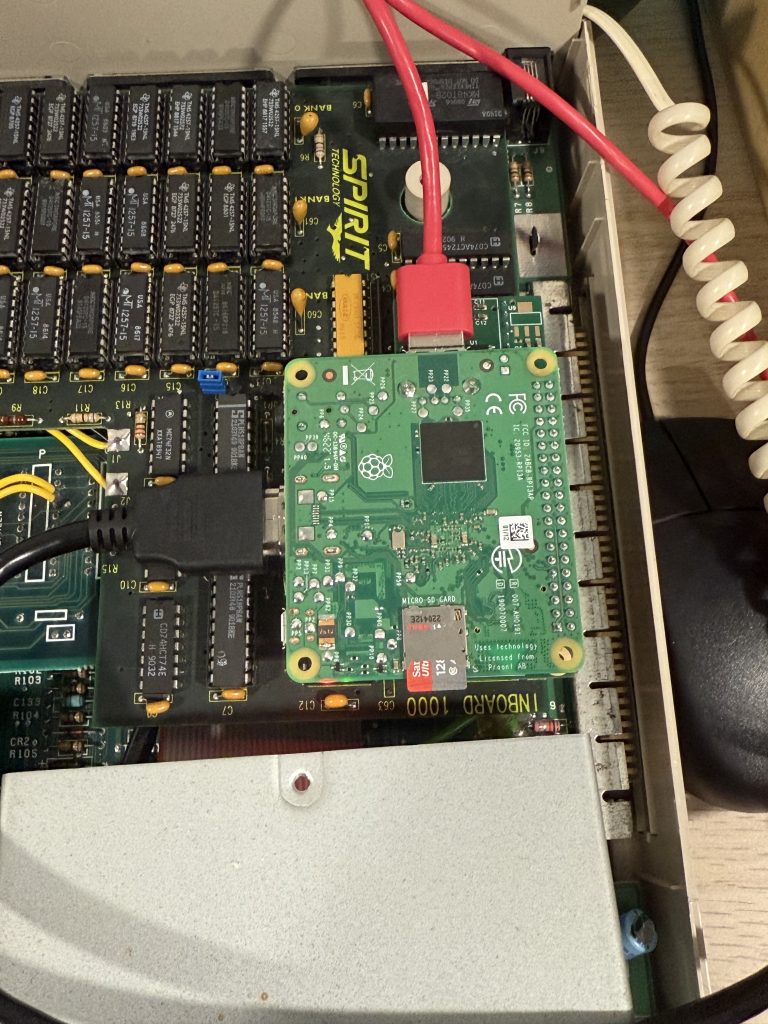
Using Pistorm changes the game. Using a Raspberry Pi and an FPGA that plugs into the Motorola 68000 CPU slot, you can add new functionality to a stock Amiga:
- Allows me to use any Kickstart ROM file and no longer require a Kickstart disk
- Not only can I replace the 68000, I can super charge that computer with any Motorola processor up to the 68040! Yes, it’s emulation, but still – it runs faster than the Amiga 3000 I had!
- I can use RTG – Retargetable Graphics – meaning I can output from the Amiga through the FPGA daughter board and the RaspberryPi. Lots of colours and high resolution, unlike the 640×480 I would normally use.
- I can mount
- Linux file systems and transfer files between the Linux environment that runs Pistorm, and the Amiga.
- Floppy disk images
- Hard Drive images
- I can access WIFI and the Interneti with the Linux and Amiga TCP/IP stacks
It is awesome having a computer from my past – one of the schools I went to had one in their music program, and a friend had an Amiga 1000 – and breathing new life into it.
I’ve owned two of the most desirable Amiga computers – the 3000, and now the 1000 which outperforms my 3000 – although that ECS chipset…
This has been a fun project, and I am getting a lot more comfortable with hardware projects. Also, the series of videos by Ben Eater has given me some good food for though as to how processors and these interesting processor emulators work. Completely fascinating.
Happy New Year!
It’s a new year and with it new resolutions?
I’ve never cared about resolutions because often we focus on the things we need to fix rather than the things that lift us up.
I’m flipping that on its head this year. I’ve resolved to do two things this year:
- Every day do something creative no matter how short or long
- Every day do some form of exercise, whether it’s using my free weights that I keep in my office, go for a swim, go for a walk or something else
The approach I’m going with is that with doing something even if it’s 5 minutes, I’ll feel accomplished, and take stock of how I’m feeling which is often better, rather than focusing on “I need to do more”, “I’ll never achieve…”, etc… which I know has been a narrative in my head for way too long.
How has it been going?
I’m liking what’s happening. I’m getting in touch with getting back to swimming and taking steps to make this a regular thing.
During meetings where I’m more listening in, I can pull out the weights and do a set of curls, shoulder presses
About 19-20 years ago, I tried a Yoga session and after I felt pretty amazing. My friend Mike mentioned that he was doing Yoga and I asked him about it and he mentioned a YouTube channel Man Flow Yoga. I decided to try some of the positions from the channel and while I’ve got a learning curve and I need to work on core strength, it’s not insurmountable.
At this point, I’m trying a few things and taking stock of how I’m feeling after. I am focusing on making this about having fun, positivity, just doing something and feeling good no matter how small or big the effort is.
Creatively, I’m driving the house nuts with finishing up my next album. The second last track is completed, and one more to go. I just need the artwork completed and then I can release it.
I’ve wondered whether or not if I’ll continue writing music or not. Looking at Spotify, I’ve realized that I released Icebergs in 2020, and Techknow in 2023 – It’s been two years since I released new music, I thought it was longer, 4 years, so I have been steadily creative, even if I go long periods of time between working on music, or perceive that.
I’m choosing to continue Polyatomic, it’s a great creative outlet for me, and it’s a great form of self expression.
While 2024 was a good year, it has also had its challenge points that have cast a grey cloud. On reflection, I’ve had sunnier days in 2024, versus 2021 and 2022. However, I’ve seen some habits, mostly around what I do with my spare time and spending too much time sitting on the couch watching YouTube. That can and will still be part of my downtime, but as I start to prepare for retirement in 10 to 15 years, I need to build habits that keep me moving and engaging my brain and not just wasting away on the couch.